By: FARAZ AHMED CHANDIO
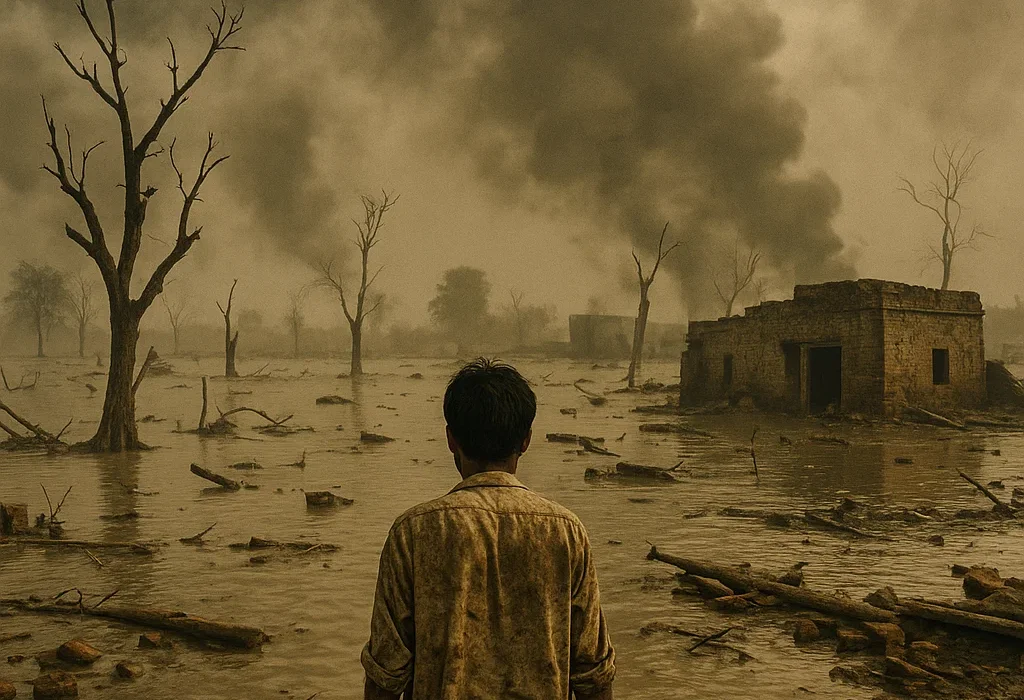
SE Asia and Sri Lanka’s recent dreadful storms resulted in floods, damage, and death, while Pakistan faced the same in 2022. Experts forewarn that Pakistan, while contributing under 1%, will bear the worst consequences from climate change. With our glaciers melting and our deltas dying, should there be hope that our children will have a future?
Yes, if we have the will and if we act. With the growing awareness about climate change, the energy crisis, and climate finance, the government cutting tariffs on imported solar panels initiated Pakistan and community mobilization. Currently, regardless of our poor energy policies, it is estimated Pakistan has the 4th or 5th largest solarised country in the world.
Experts like Dr Zulfiqar Bhutta and Dr Jai Das speak on and co-edit the informative and relevant publications Climate Change and Water Related Challenges in Pakistan: Tangible Solutions. Dr Bhutta and Dr Jai Das see, through their publications, the many ways Pakistan’s public health systems, livelihoods, and lives are devastated through climate threats and the loss of freshwater. The content of the book should be the education of all policymakers, parliamentarians, and politicians of Pakistan, and all schools and universities. We need education and knowledge for this fight and the battle focus of this education are the many ways climate change can threaten and kill.
As Ajaz Ahmad says, during August 2025’s landslide and catastrophic floods in Chitral and Gilgit-Baltistan, local shepherds warned disaster management of the imminent and coming floods. The government’s proposed system for natural disaster early warning is doomed to failure, Ajaz says, unless it is community based and uses indigenous knowledge. Dr Das points out the need for Pakistan to focus on the rural and climate change related portions of the community ancestral knowledge. In Pakistan, this knowledge, and the wisdom in it, should drive much of the work on climate change.
We can’t be educated enough about the climate battle.
Climate change hits vulnerable groups hardest, especially the very young, elderly, and women, who often cannot escape the heat and natural disasters. During the 2022 floods in Sindh and Balochistan, 600,000 pregnant women in the region were displaced. Many fled towards higher ground, camping in the open on floodbanks and completely lacking antenatal and postnatal care. While women were sexually assaulted in relief camp situations, some regions enforced home confinement for women. They were made to give birth in dark, derelict, and polluted houses that were flooded to the knees with dirty water.
Besides the loss of life and livelihoods that entire communities experienced, women were further isolated and subjected to more sexual and physical violence, and there was an increase in the gross neglect of women’s sexual and reproductive health. Twenty-five percent of the women in a post-floods Dadu survey three years after the floods reported suffering from anxiety and depression. However, in the small pilot-tested community intervention reported in Das and Bhutta’s book, there was a support whispering program and the Lady Health Workers were able to provide a venue where flood-affected women could express their anger with their friends and peers, and This resulted in a significant reduction of the mild and moderate depression that was reported.
Dr. Mehreen Mujtaba, an Associate Professor at the Health Services Academy, Islamabad, fights the fight of building climate-resilient health systems. Mujtaba presented a case study of Pakistan on the subject of gender-focused adaptation at the WHO Global Climate and Health Summit Brazil in the year of 2014. Together with Pathfinder International, the Pakistan government trained so-called Climate Champions, female community leaders who were supposed to act as primary disaster responders and educate people during non-disaster periods. In Sindh and Khyber Pakhtunkhwa, about 750 – 800 girls and women, who spoke the local languages, provided local people with education regarding safe nutrition and disease prevention, as well as helped women to access safe and health facilities for childbirth (safe delivery). Mujtaba was the previous Director of the Climate Change and Health in the Ministry of Health. She initiated a number of climate risk and vulnerability assessments within the country. They identified our deficiencies in the climate-sensitive sectors of health, agriculture, and water and showed that the climate crisis is already here. Dr. Mujtaba is currently working on the Draft of a National Health Adaptation Plan, which has the purpose of obtaining international funds in adaptation and mitigation of climate crises.
In the end, people working in the districts and the community are going to be the ones helping to ensure our kids have a future.
Mujtaba explains that hope and optimism are warranted, but only if climate change becomes, as Bhutta says, a politically primary issue, as essential as `roti, kapra aur makan.’ Dr. Bhutta must specify that South Asia and Sri Lanka are suffering from thunderstorms, floods, loss of life, and destroyed infrastructure. Pakistan witnessed the same para-monitors of climate change. Experts remind that Pakistan will carry the most severe climate change, even though Pakistan contributes less that 1% of global carbon. As the country’s glaciers die and its deltas die, is there hope that future generations will die?
Mujtaba describes hope and optimism, words which advocates of climate change activism must explain. Thanks to climate change, Anticipatory governments are supposed to be active, civic change. Crisis Mobilization to active community engagement solar panels, shifted national focus. commandeered community efforts enabled activated solarization. Despite weak fossil fuel dominated energy policies, Pakistan is the worlds fourth or fifth most Solarised nation.
Prominent physicians and educators Dr. Zulfiqar Bhuttta and Dr. Jai Das have recently co-published, Climate Change and Water-Related Challenges in Pakistan: Tangible Solutions. The book discusses the impact of climate change on the “degradation of freshwater resources, public health systems, and livelihoods across Pakistan” in the first 12 chapters. This book should be in the hands of every politician, advisor, and decision-maker, and it should be a requirement in schools and universities. We need to be educated on this struggle, and the battle is far from over.
In the Chitral and Gilgit-Baltistan landslide and flooding disaster in August of 2025, local herders warned Ajaz Ahmad (Forestry and Biodiversity Specialist) and the disaster management team of impending floods. Dr. Das believes that the government’s planned natural disaster early-warning systems will fail unless community-based, local, and indigenous knowledge systems are integrated. She also argues that the fight against climate change in Pakistan relies heavily on the rural communities’ immense pool of heritage knowledge.
Lastly, we will never be educated enough on the climate battle.
Those at most at risk from climate change are also its most defenceless victims – women, children, and the elderly, who are least able to defend themselves from natural disasters or extreme heat. The 2022 floods in Sindh and Balochistan caused the relocation of 600,000 pregnant women. Most crossed to higher grounds and open floodbanks and remained shelterless, with no antenatal or postnatal care. In relief camp women experienced sexual violence; in some localities, women could not go outside their houses for security reasons. In dark, dilapidated, flood-affected homes, full of contaminated stagnant water, women gave birth.
Besides the most fundamental threats to life and livelihood that entire populations face, women also experienced the most profound neglect of their sexual and reproductive health, and as well as the predominant and rising incidence of domestic violence. A survey that was conducted 3 years after the floods, in Dadu, found that of the 25% of women that were surveyed, a continuous lack of improvement in their health was attributable to anxiety and depression. The absence of such intervention did not lack in small pilot implementations that were described in Das and Bhutta’s Book, where Lady Health Workers used the depressed women and their flood mates peer support and friendship groups as the basis of creating community safe spaces for expressing frustrations. This had the positive result of reduced levels of depression in a significant number of women that participated in the study.
Dr Mehreen Mujtaba, associate professor in the Department of Climate Change, Health Services Academy in Islamabad, is engaged in building climate-resilient health systems as well. In 2014, she was at the WHO Global Climate and Health Summit in Brazil, where she presented a case study from Pakistan on adaptation with a gender perspective. Pathfinder International assisted the government in training Climate Champions in Pakistan, who are female community leaders and first responders in natural disasters and awareness leaders in normal times. In Sindh and KP, around 750-800 female students and women, who were local language fluent, educated locals on safe nutrition and disease prevention, and assisted women in finding safe shelters, as well as in safe delivery.
As the previous Director of Climate Change and Health in the Ministry of Health, Dr Mujtaba led a number of climate risk and vulnerability assessments in different parts of Pakistan. He identified the country’s vulnerabilities in agriculture, water resources, and health and demonstrated that the climate crisis is already upon us. Dr Mujtaba is currently working on a national health adaptation plan that will enable the country to seek international funding for adaptation and mitigation of climate crises.
In the end, the people will be the real change makers to secure the future of our children.
Dr Mujtaba states, “the takeaway is one of hope and optimism” — but this can be only the case when the overriding climate change is, as Dr Bhutta says, “politically central” to the order of “roti, kapra aur makan”.