BY: FARAZ AHMED CHANDIO
Climate change was once discussed as something that might happen. Today, it is happening. Rising temperatures, prolonged droughts, erratic rainfall, shrinking glaciers, and devastating floods were once confined to scientific models; they are now unfolding across Pakistan’s cities, villages, farmlands, and river basins. What was previously theoretical has become lived experience, visible in daily life and increasingly difficult to ignore.
The world today operates under an inequitable and unjust form of climate change “triage.” Pakistan is among the most climate-vulnerable countries, yet it contributes very little to global greenhouse gas emissions. While this injustice must be acknowledged, outrage alone offers no protection. Responsibility without response changes nothing. What remains now is the urgent need to act.
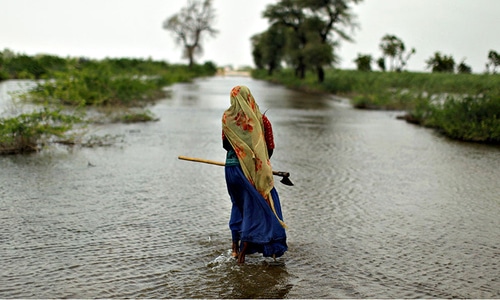
Climate data from Pakistan shows a clear warming trend accompanied by deeply unequal rainfall patterns. Some regions are experiencing heavier and more destructive monsoon rains, while others endure long and intensifying dry spells. These uneven shifts are destabilising systems on which millions depend. Agriculture, the country’s largest source of employment, is under growing strain. Water resources are deteriorating. Cities are suffering from lethal heatwaves, while rural areas face the cruel paradox of drought followed by destructive flooding. These impacts are not evenly distributed, nor are they hypothetical. They represent measurable and accelerating change.
Of all sectors, water illustrates the danger most starkly. Pakistan relies on an intricate network of rivers fed largely by glaciers in the northern mountains. Those glaciers are now retreating rapidly. Earlier assumptions suggested that increased melting might temporarily boost river flows, but emerging evidence suggests the opposite is now true. Pakistan appears to be entering a phase of declining water availability, with serious implications for irrigation, hydropower generation, drinking water quality, and social stability.
Lower water availability carries cascading risks. Reduced irrigation threatens food security, while declining hydropower output strains an already fragile energy system. Water quality deteriorates as river flows weaken, and competition over scarce resources intensifies. At the same time, floods are becoming more destructive, washing away infrastructure, displacing communities, and deepening poverty. Water insecurity must therefore be understood for what it truly is: a direct threat to national security.
Extreme weather is no longer an exception; it is becoming the new normal. Pakistan is facing more frequent and intense droughts, floods, cyclones, and heatwaves. Coastal communities are increasingly exposed to stronger storms and rising seas, while polluted urban centres trap heat, turning summers into public health emergencies. These conditions make everyday life dangerous, particularly for those with limited access to healthcare, housing, and basic services.
As is often the case, the poorest communities bear the greatest burden. Climate change compounds existing inequalities, deepening insecurity for those least equipped to cope with its impacts. Every delay in action magnifies future losses, making recovery more expensive and adaptation more difficult.
Global climate negotiations offer little immediate relief for Pakistan. While climate finance remains essential, it cannot substitute for decisive domestic action. Adaptation must be treated as a core development priority. This means investing in efficient and sustainable water management, building climate-resilient agricultural systems, improving flood forecasting and disaster preparedness, designing cities that can withstand extreme heat, protecting coastal ecosystems such as mangroves, and strengthening community-based systems that respond quickly to climate shocks. Resilience is not an abstract goal; it is a matter of protecting lives and livelihoods before disaster strikes.
Ultimately, climate change is a test of Pakistan’s governance, planning, and political will. Reactive policies and short-term fixes are no longer sufficient. Climate risk must be embedded into every major development decision, from infrastructure and housing to agriculture and energy. The science is clear, the impacts are visible, and the cost of inaction is unsustainable. This is not a crisis of the future. It is the emergency of today. The real question is no longer whether Pakistan can afford climate adaptation, but whether it can afford not to act.