By: FARHAN AHMED CHANDIO
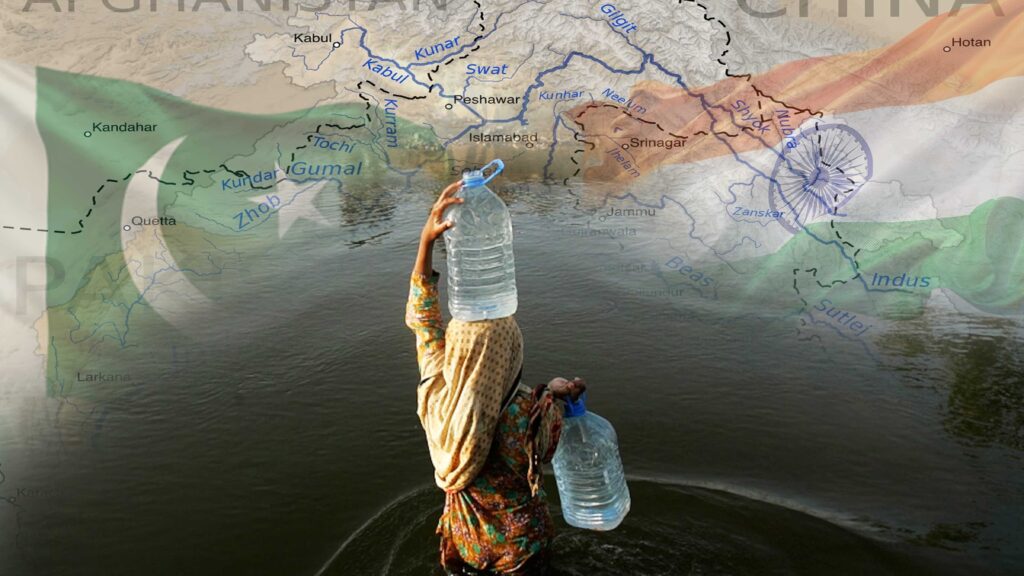
To understand the gravity of recent developments, it is essential to begin with history. The Indus Waters Treaty, brokered by the World Bank, emerged from one of the most complex water disputes in modern history. After the Partition of the subcontinent in 1947, which created Pakistan and India, the Indus Basin irrigation system, originally designed for a single country, was abruptly divided between two sovereign states. The assumption that water flows would remain undisturbed quickly proved unrealistic.
The first major shock came on April 1, 1948, when India halted irrigation supplies to Pakistan without prior notice. Although supplies were later restored following a joint statement, the incident exposed Pakistan’s vulnerability as the lower riparian state. Subsequent negotiations failed to produce a durable solution, prompting Pakistan to propose referral of the dispute to the International Court of Justice or another neutral forum. India declined.
A breakthrough came in 1951 when David E. Lilienthal, former Chairman of the Tennessee Valley Authority, visited both countries and proposed an engineering-based solution. This led to the involvement of Eugene R. Black and the World Bank, which facilitated negotiations between the two sides. Although early efforts, including the establishment of a Working Party, did not succeed, they laid the groundwork for a more structured proposal.
In 1954, the World Bank advanced a plan based on the principle of river division rather than joint management. Under this proposal, Pakistan would relinquish claims to the Eastern Rivers after receiving compensation and replacement infrastructure funded by India, while India would gain control over those rivers and Pakistan would secure rights over the Western Rivers. However, concerns remained. Pakistan commissioned an independent assessment by an American engineer, who concluded that the Western Rivers alone would not meet even the usage levels envisaged under the plan. These findings were formally communicated to the World Bank, underscoring the technical and strategic sensitivities involved.
Despite these challenges, prolonged negotiations eventually culminated in the signing of the Indus Waters Treaty in 1960. The agreement has since been regarded as one of the most resilient water-sharing arrangements in the world, surviving wars and prolonged political hostility between the two countries.
Against this historical backdrop, recent developments take on deeper significance. On April 23, 2025, India unilaterally announced the suspension of the Treaty following the tragic incident in Pahalgam, located in Jammu and Kashmir, where 26 tourists were killed. The incident was swiftly followed by accusations against Kashmiris and Pakistan, leading to a rapid and controversial decision regarding the Treaty. Pakistan has consistently maintained that the episode bore the hallmarks of a false flag operation, used as a pretext for a move that had long been contemplated.
Since then, Pakistan has raised the matter at international forums, arguing that no party can unilaterally suspend a binding international agreement for political or strategic purposes. Water, it asserts, cannot be weaponized. The issue has also highlighted broader concerns about the effectiveness of global institutions. The United Nations Security Council has, for decades, struggled to implement its resolutions on Kashmir, while the World Bank has refrained from taking decisive action despite its central role in the Treaty.
Pakistan’s position rests on legal and moral grounds. As a lower riparian state, it is inherently vulnerable to upstream actions. Any disruption in water flows threatens not only agriculture and energy production but also the livelihoods of millions. For this reason, Pakistan has called upon international institutions and the global community to uphold the sanctity of treaties and to press India to reverse its unilateral decision.
The implications of this dispute extend beyond South Asia. If international agreements can be set aside unilaterally, the credibility of treaty-based cooperation worldwide is at risk. Institutions such as the International Court of Justice and the World Bank, along with states that claim to uphold international law, face a critical test. Their response will determine whether principles of fairness and justice prevail, or whether power alone dictates outcomes.
Ultimately, the Indus Waters Treaty is not merely a bilateral arrangement. It is a cornerstone of regional stability and a symbol of the possibility of cooperation even in the most difficult circumstances. Undermining it risks not only immediate harm to Pakistan but also long-term damage to the international system that depends on trust, law, and mutual obligation.